

In Memoriam
Co-Founder of ALIUS (2016) · 1990–2020
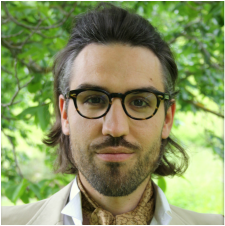
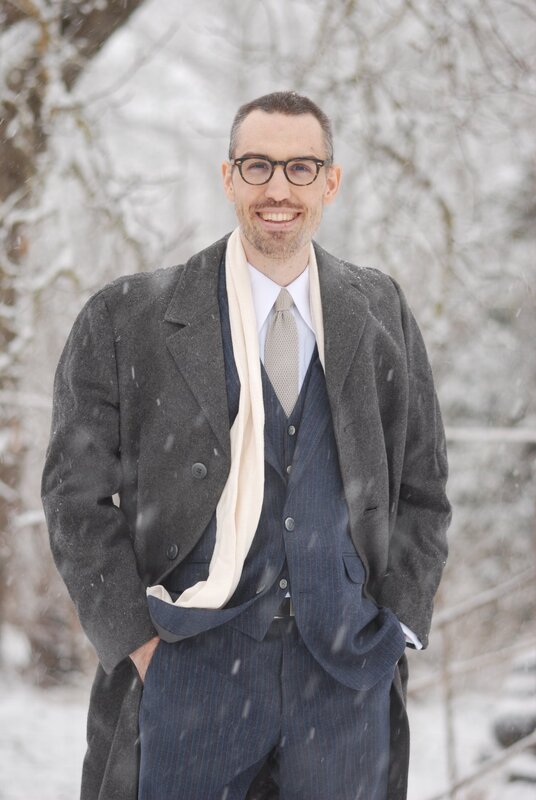
On April 11th, 2020, Martin Fortier tragically passed away after a long and harrowing battle with cancer. He was thirty years old. We mourn the loss of a wonderful friend and a brilliant colleague, gone far too soon to realize his extraordinary potential despite his many precocious achievements.


Martin's work sat at the intersection of philosophy of mind, cognitive anthropology and the cognitive science of religion. The Institut Jean Nicod tribute workshop described him as an EHESS doctoral researcher attached to the Jean Nicod Institute, trained in philosophy and anthropology, and on the verge of defending a nearly 600-page thesis. His published work ranged across the epistemic and ontological status of hallucinations, feelings of reality and hyper-reality, spiritual experiences, shamanism, altered states of consciousness and the diversity of consciousness more generally.
He argued that hallucinogenic experience cannot be understood through nativist neuropharmacology alone: culture, ritual context, expectation, attention and social learning shape what altered states become for the person undergoing them. His preferred term was serotonergic hallucinogen rather than "psychedelic", a deliberately non-committal label designed to keep experimental work free of twentieth-century counter-cultural framing.
He also insisted on distinctions that often disappear in popular psychedelic discourse, especially the contrast between serotonergic hallucinogens and anticholinergic deliriants, and the need to treat hallucinations as experiences with sensory content, a feeling of reality, and culturally variable modes of interpretation. That combination of technical caution and intellectual breadth made his work central to ALIUS' interdisciplinary identity.
Martin's lecture, The Neuroanthropology of Hallucinogenic Experiences, has been restored from the archived ALIUS memorial page. The recording is hosted by the Amsterdam Psychedelic Research Association.
Martin helped shape many of the Bulletin's early conversations. These pieces remain part of the ALIUS library:
It is with grief and sorrow that I share this post, in remembrance of Martin Fortier — one of the dearest friends and contributors within our scientific community. His passing came too soon and will have left a deep absence in our hearts. I derived a deep sense of belonging to the academic community by knowing Martin, and rarely have I encountered somebody so generous with his knowledge, so willing to collaborate across disciplines, so dedicated to a vision of science as a societal project.
Martin's openness to collaborate with other people served as a role model to value science as a societal project. He sought out conversations, gave younger colleagues his time and references, disagreed carefully, and left every room more curious than he found it.